Kelly معیار اور رولیٹ
Kelly معیار بتاتا ہے کہ برتری رکھنے والے جواری کو کتنی داؤ کی رقم لگانی چاہیے۔ رولیٹ کے لیے اس کا جواب واضح ہے: کچھ نہیں۔

Kelly داؤ کی رقم = برتری / امکانات کا تناسب۔ منفی برتری کے ساتھ فارمولا منفی کسر دیتا ہے، جس کا مطلب ہے داؤ نہ لگائیں۔ یہ معیار پھر بھی یہ سمجھنے میں مفید ہے کہ جھکاؤ سے فائدہ اٹھانے والے کھلاڑی داؤ کی رقم کیوں اس طرح متعین کرتے تھے، اور باقی سب کو بجٹ کے مطابق کیوں مقرر کرنا چاہیے۔
معیار
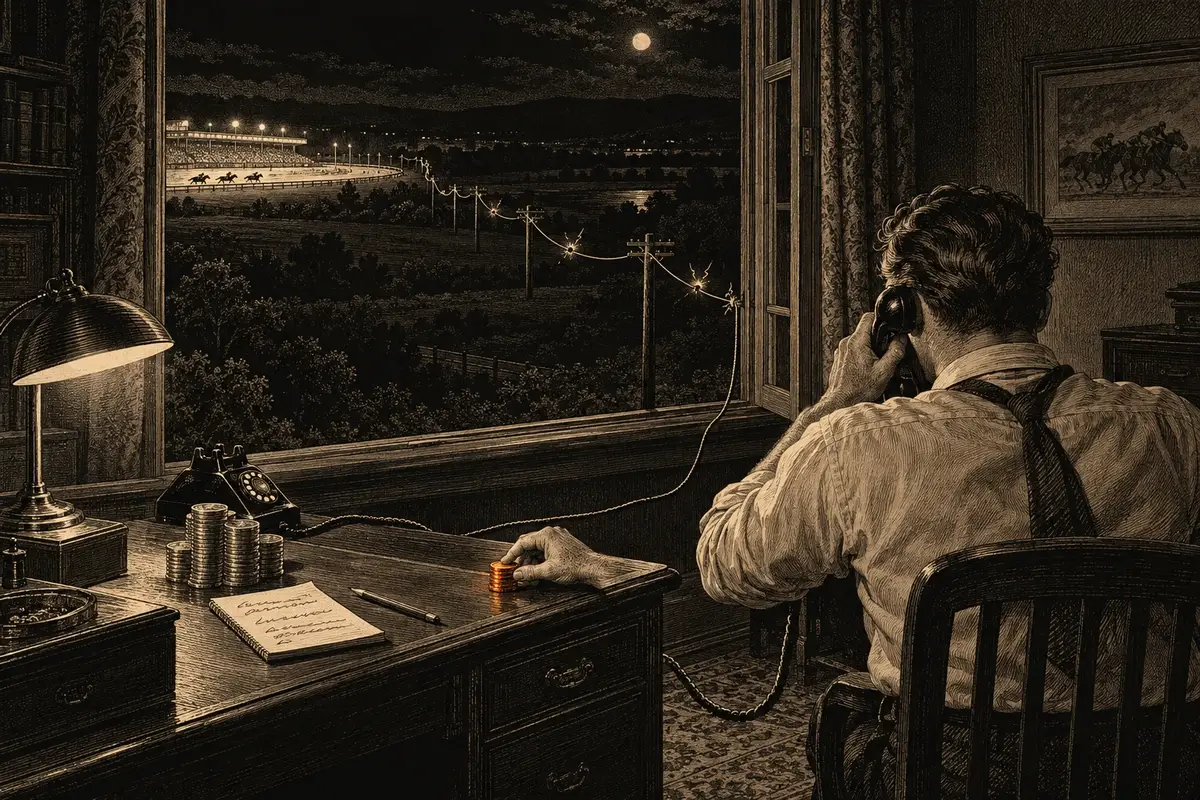
John Kelly (1956) asked how a gambler with a known edge should size bets to maximize long-run growth of the bankrollرقمکھیل کا سرمایہکھیل کے لیے الگ رکھی ہوئی کل رقم۔ کھیل کے سرمائے کا انتظام یہ طے کرتا ہے کہ فی داؤ اور فی نشست اس کا کتنا حصہ خطرے میں ڈالا جائے۔پورا پڑھیں →. The answer, for a bet paying b to 1 with win probabilityریاضیامکانکسی نتیجے کا امکان، 0 سے 1 یا 0% سے 100% تک۔ ایک نمبر: 1/37 = 2.70%۔پورا پڑھیں → p and loss probability q = 1 − p, is to stake the fraction f* = (bp − q) / b of the bankroll. Positive f* means bet that fraction; zero or negative means do not bet. Kelly worked at Bell Labs, and his paper, “A new interpretation of information rate”, set the problem in Claude Shannon’s theory of information: a gambler who gets tips over a noisy line, at fair odds, can grow the bankroll at best at the rate the line carries information. This is a growth objective under a probability model, not a promise to finish ahead after a particular number of bets. A spending limit, finite deadline or payoutرقمخالص ادائیگیجیتنے والے داؤ کی وہ خالص ادائیگی جو واپس کی گئی داؤ کی رقم کے اوپر “X to 1” کے طور پر بتائی جاتی ہے۔پورا پڑھیں → cap changes the decision problem.
رولیٹ میں Kelly داؤ
For redداؤسرخ18 سرخ نمبروں پر برابر ادائیگی کا داؤ۔ فرانسیسی: rouge۔پورا پڑھیں →: b = 1, p = 18/37, q = 19/37; f* = (18/37 − 19/37)/1 = −1/37. For a straight upداؤایک نمبر کا داؤایک نمبر، ادائیگی 35:1۔پورا پڑھیں →: b = 35, p = 1/37, q = 36/37; f* = (35/37 − 36/37)/35 = −1/1295. Every standard bet gives a negative Kelly fraction, because every bet has a negative edge, and the growth-optimal stake is zero. Kelly betting on roulette is a formal way of saying what the house-edge page says: no positive stake maximizes expected logarithmic growth when the bet has negative expectation. A particular session can still end in profit. La partageقاعدہLa partageفرانسیسی قاعدہ: صفر آنے پر برابر ادائیگی کے داؤ کی آدھی رقم واپس ہوتی ہے۔ یہ ان داؤں کی کازینو برتری کو 1.35% تک آدھا کر دیتا ہے۔پورا پڑھیں → needs a separate three-outcome calculation: a win, a full loss or a half-loss on zeroپہیہصفرواحد سبز نمبر خانہ جسے کوئی برابر ادائیگی، درجن یا ستون داؤ نہیں ڈھانپتا؛ کازینو برتری کا ماخذ۔ اسے ایک صفر اور 0 بھی کہتے ہیں۔پورا پڑھیں →. Its expected log growth also falls as the stake increases from zero.
| داؤ | b | p | f* = (bp − q)/b | مطلب |
|---|---|---|---|---|
| سرخ، یورپی | 1 | 18/37 | −0.027 | داؤ نہ لگائیں |
| سرخ، La Partage | تین نتائج | 18/37 جیت؛ 1/37 آدھا نقصان | دو نتائج والا فارمولا لاگو نہیں ہوتا | نمو کے لحاظ سے بہترین داؤ کی رقم 0% |
| ایک نمبر کا داؤ | 35 | 1/37 | −0.00077 | داؤ نہ لگائیں |
| 1/30 کے نمبر خانے پر ایک نمبر کا داؤ (جھکاؤ والا) | 35 | 1/30 | +0.0057 | کھیل کے سرمائے کا 0.57% داؤ لگائیں |
| 1/25 کے نمبر خانے پر ایک نمبر کا داؤ | 35 | 1/25 | +0.0126 | کھیل کے سرمائے کا 1.26% داؤ لگائیں |
جہاں Kelly کا اطلاق ہوا
Suppose a pocketساماننمبر خانہگھومنے والے حصے میں 37 نمبر لگے خانوں میں سے ایک۔ اسے slot یا cup بھی کہتے ہیں۔پورا پڑھیں → really has a stable, known probability of 1 in 30 and pays 35 to 1. The Kelly fraction is 0.57%: about $57 from a $10,000 bankroll. Under independent spinsریاضیآزاد اسپنہر اسپن کے امکانات گزشتہ نتائج سے قطع نظر ایک جیسے ہیں۔ اس سائٹ کے ہر حساب کی بنیاد۔پورا پڑھیں → and exact fractional staking, the geometric growth factor over 1,000 spins is about 1.7. Expected bankroll grows faster because rare large wins pull up the average. These are model calculations, not evidence that any named historical player used Kelly or achieved this result.
عام اور اوسط
The gap between the typical bankroll and the average one is wide. Take a pocket that hits 1 time in 25, a hypothetical edge of 44% per unitرقماکائیوہ بنیادی داؤ کی رقم جس میں کوئی نظام یا کھلاڑی کام کرتا ہے۔ داؤ بڑھانے کے نظام اکائیوں میں بیان ہوتے ہیں تاکہ ہر میز پر لاگو ہوں۔پورا پڑھیں → staked. Kelly stakes 1.26% of the bankroll on it. After 1,000 spins the typical bankroll has grown about 11.5 times, while the average, pulled up by a few very lucky runs, has grown about 249 times. Betting more than Kelly raises the average and lowers the typical result: at twice the Kelly stake the typical bankroll only doubles, and by two and a half times the Kelly stake it shrinks, although every bet still carries a 44% edge. In this example, half-Kelly retains about 78% of the expected log growth. This fraction depends on the probabilities and payout.
| داؤ کی رقم، Kelly کا حصہ | داؤ کی رقم، کھیل کے سرمائے کا % | 1,000 اسپنوں کے بعد عام کھیل کا سرمایہ |
|---|---|---|
| ½ | 0.63% | × 6.7 |
| 1 | 1.26% | × 11.5 |
| 1½ | 1.89% | × 7.4 |
| 2 | 2.51% | × 2.2 |
| 2½ | 3.14% | × 0.38 |
| 3 | 3.77% | × 0.04 |
جب برتری اندازہ ہو
Kelly uses the true probabilities, but a player usually has only estimates. Selecting the busiest pocket from a past record creates a selection problem: even a fair wheel has a busiest pocket. Its observed rate can overstate its future probability. Choosing the stake from that same record compounds the error. An independent follow-up sample helps test a proposed bias (see How to Detect Roulette Wheel Bias). Reducing the calculated fraction reduces exposure, but cannot turn a false edge into a real one.
برتری رکھنے والے لوگ
Haghani and Dewey (2016) studied 61 participants given $25 and 30 minutes to bet on a simulated coin with a disclosed 60% chance of heads. The payout cap was $250; its value was revealed when a proposed winning bet would reach it. Their reported 21% success category included balances of at least $200, while the 28% “bust” category meant less than $2, not necessarily zero. Eighteen participants bet their entire balance on one flip. The uncapped Kelly fraction is 20%, but the cap and deadline change the optimization problem. The experiment illustrates how stake choices matter even with a known advantage; it does not establish one best strategy for every objective.
اس کے بجائے کیا استعمال کریں
برتری کے بغیر، داؤ کی رقم مقرر کرنا بڑھوتری نہیں بلکہ بجٹ کا سوال ہے: داؤ کی رقم = وہ رقم جو آپ فی اسپن خرچ کرنے پر آمادہ ہیں، جو فی گھنٹہ بجٹ اور میز کی رفتار سے نکلتی ہے (کھیل کے سرمائے کے انتظام کا صفحہ)۔ Kelly کی عام کھلاڑی کے لیے دین اس کے جواب کی وضاحت ہے: صفر۔ صفر سے اوپر جو کچھ بھی آپ داؤ پر لگاتے ہیں وہ کھیلنے کی قیمت ہے، جسے آپ چنتے ہیں، کسی فارمولے سے بہتر نہیں بنایا جاتا۔
جزوی Kelly اور “رقم کے انتظام” پر ایک نوٹ
Betting a fixed percentage of the current bankroll is proportional staking: the stake rises after wins and falls after losses. Flat bettingحکمت عملییکساں داؤہر اسپن میں ایک ہی رقم داؤ پر لگانا۔ وہ بنیادی پیمانہ جس سے ہر داؤ بڑھانے کے نظام کا موازنہ ہوتا ہے۔پورا پڑھیں → instead keeps the cash stake fixed. Neither creates an edge on ordinary roulette. With infinitely divisible stakes and a fraction below 100%, proportional staking never reaches exactly zero in finitely many losses, but the balance can become arbitrarily small. Real table minimums can prevent further play much sooner. The growth-optimal fraction remains zero.
فارمولا
سوالات
Only when the actual probabilities, payouts and conditions give a credible positive advantage. Standard bets on an unbiased wheel have no such advantage.
Using half the calculated fraction reduces exposure to errors in the estimated edge. The familiar three-quarters-growth rule is an approximation for small advantages, not a universal identity. It does not protect against an edge that does not exist.
نہیں۔ Kelly برتری ہونے پر بڑھوتری کو بہتر بناتا ہے۔ کھیل کے سرمائے کا انتظام برتری نہ ہونے پر خرچ قابو میں رکھتا ہے۔
ریاضی کے ساتھ تفریح
پہلے خود انہیں حل کرنے کی کوشش کریں۔ ہر حل بند ہے؛ جب تیار ہوں تو کھولیں۔
Suppose a hypothetical bet on one number has a known 44% edge under standard payoutsرقمخالص ادائیگیجیتنے والے داؤ کی وہ خالص ادائیگی جو واپس کی گئی داؤ کی رقم کے اوپر “X to 1” کے طور پر بتائی جاتی ہے۔پورا پڑھیں → and independent spinsریاضیآزاد اسپنہر اسپن کے امکانات گزشتہ نتائج سے قطع نظر ایک جیسے ہیں۔ اس سائٹ کے ہر حساب کی بنیاد۔پورا پڑھیں →. Kelly gives a 1.26% bankrollرقمکھیل کا سرمایہکھیل کے لیے الگ رکھی ہوئی کل رقم۔ کھیل کے سرمائے کا انتظام یہ طے کرتا ہے کہ فی داؤ اور فی نشست اس کا کتنا حصہ خطرے میں ڈالا جائے۔پورا پڑھیں → fraction. What if the same 44% edge came on one bet spread over five neighboring numbers?
حل دکھائیں
جواب تب Kelly کھیل کے سرمائے کا 7.1% کہتا ہے، اور سرمایہ تقریباً چھ گنا تیزی سے بڑھتا ہے: 1,000 داؤ میں تقریباً 1.25 ملین گنا، بمقابلہ تقریباً 11.5 گنا۔
A straight upداؤایک نمبر کا داؤایک نمبر، ادائیگی 35:1۔پورا پڑھیں → with a 44% edge wins with chance 0.04, since 36 × 0.04 = 1.44. Kelly’s stake is the edge divided by the odds: 0.44/35 = 1.26%. The typical growth per bet is 0.04 × ln(1 + 35 × 0.0126) + 0.96 × ln(1 − 0.0126) ≈ 0.00244, so 1,000 bets multiply the bankroll by about e^2.44 ≈ 11.5.
Spread one stake over five numbers and the bet wins with chance 0.20 and pays 36/5 for 1, that is 6.2 to 1: still a 44% edge, since 0.2 × 7.2 = 1.44. Kelly’s stake becomes 0.44/6.2 = 7.10%, and the growth per bet 0.01404, about 5.75 times as much. Over 1,000 bets that is e^14.04, about 1.25 million.
The edge is the same; the swings are smaller. A bet that wins one time in five has a larger growth-optimal fraction in this model, although losses can still reduce the bankroll severely. This comparison assumes the same known edge for both bets; actual predictions need independent evidence.
Assume two numbers are adjacent on the betting layoutسامانمیز کا نقشہمیز پر چھپا ہوا داؤ کا جال۔ اسے میز، فیلٹ یا کپڑا بھی کہتے ہیں۔پورا پڑھیں → and each has a stable, known probabilityریاضیامکانکسی نتیجے کا امکان، 0 سے 1 یا 0% سے 100% تک۔ ایک نمبر: 1/37 = 2.70%۔پورا پڑھیں → of 1 in 25 on independent spins. Compare a splitداؤدو نمبروں کا داؤساتھ لگے دو نمبر، ادائیگی 17:1۔پورا پڑھیں → between them at 17 to 1 with equal straight-up stakes on the two numbers. How much does Kelly say, and how fast does the bankroll grow compared with one such pocketساماننمبر خانہگھومنے والے حصے میں 37 نمبر لگے خانوں میں سے ایک۔ اسے slot یا cup بھی کہتے ہیں۔پورا پڑھیں →?
حل دکھائیں
جواب کوئی فرق نہیں: دو نمبروں کے داؤ پر کھیل کے سرمائے کا 2.59%، یا ہر نمبر پر 1.29%۔ عام کھیل کا سرمایہ 1,000 اسپنوں میں تقریباً 155 گنا بڑھتا ہے، ایک خانے کے ساتھ 11.5 گنا کے مقابلے میں۔
The split wins with probability 2/25 = 0.08 and pays 17 to 1, so it returns 18 × 0.08 = 1.44 per unitرقماکائیوہ بنیادی داؤ کی رقم جس میں کوئی نظام یا کھلاڑی کام کرتا ہے۔ داؤ بڑھانے کے نظام اکائیوں میں بیان ہوتے ہیں تاکہ ہر میز پر لاگو ہوں۔پورا پڑھیں → staked: an edge of 44%, the same as one biased pocket. Kelly’s stake is the edge divided by the odds: 0.44/17 = 2.59%.
Two straight-up bets of 1.29% each give exactly the same results. When either number comes up, one chipرقمچِپمقررہ رقم کی نمائندگی کرنے والی چِپ، جو داؤ لگانے کے لیے نقشے پر رکھی جاتی ہے۔ اسے check بھی کہتے ہیں۔پورا پڑھیں → wins 35 to 1 and the other is lost, a net of 34 × 1.29% = 44% of the bankroll, as the split pays; when neither does, both are lost.
The growth per spin is 0.00505, against 0.00244 for one pocket, so over 1,000 spins the typical bankroll grows e^5.046 ≈ 155 times rather than e^2.44 ≈ 11.5 times. The geometric growth factor is larger because the combined bet wins more often at the same 44% edge. It is a model result, not a guaranteed bankroll.
مزاحیہ وقفہ
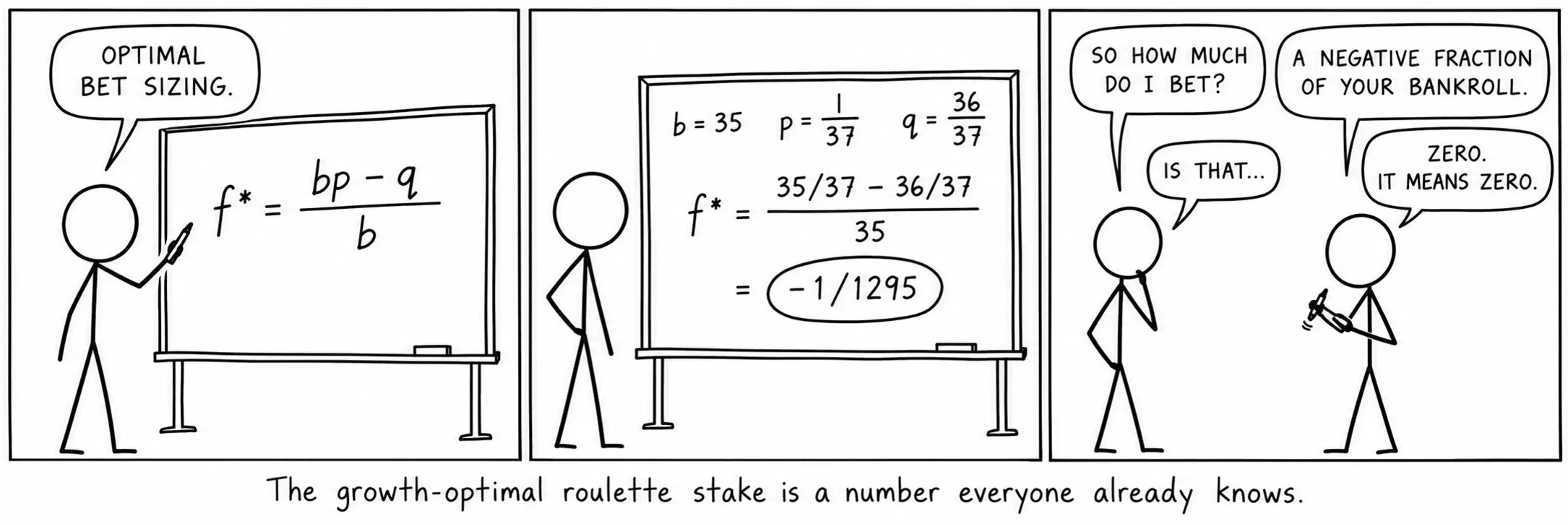
بڑھوتری کے لحاظ سے بہترین رولیٹ داؤ کی رقم وہ عدد ہے جو سب کو پہلے سے معلوم ہے۔
ذرائع
- Kelly, J. L. “A new interpretation of information rate.”
- Breiman, L. “Optimal gambling systems for favorable games.”
- Thorp, E. O. “Optimal gambling systems for favorable games.”
- Thorp, E. O. The Mathematics of Gambling.
- Epstein, R. A. The Theory of Gambling and Statistical Logic, 2nd ed.
- Taylor, D. G. Games, Gambling, and Probability: An Introduction to Mathematics, 2nd ed.
- Ethier, S. N. The Doctrine of Chances: Probabilistic Aspects of Gambling.
- Haghani, V. & Dewey, R. “Rational decision-making under uncertainty: observed betting patterns on a biased coin.”